
What I’ve learned about clutter and mental load
For a long time I thought clutter was mostly a visual issue. Something on the surface. A tidying problem. A “I just need to get more organized” kind of problem.
Over time — and especially after becoming a stay-at-home mom — I started noticing something deeper. When physical clutter builds up around me, my mental clutter builds up right alongside it. The two are genuinely, directly connected, and once I saw that I could not unsee it.
When the To-Do List Is Everywhere
When clutter accumulates, I do not just see it. I feel it. Every surface becomes a silent reminder of something that still needs to be handled — the toy pile, the overflowing clothes basket, that corner that has been “on the list” for two weeks. It is like my to-do list has jumped off the paper and is staring at me from every direction in the room.
Instead of being present, I am mentally drafting a plan to get things back under control. I feel distracted. Irritable. A little foggy. And here is the part that bothers me most: the people I am trying to manage everything for — my family — start to feel like interruptions. I am trying to play, but I am thinking about the mess. I am trying to enjoy a moment, but my brain is quietly tracking every unfinished task in the background.
Clutter turns into constant background noise. And it is exhausting in a way that is hard to name until you clear it and suddenly realize how much quieter your mind feels.
When I First Noticed the Shift
This connection became really clear after we had kids and I started staying home full time. We were home all day, which meant more use, more movement, and a lot more mess. My old routines did not work anymore — but it took me a while to actually admit that and adjust.
What I have noticed is that any time life shifts — a new baby, a busy season, even just a change in weather that keeps us inside more — clutter starts to build. And it does not happen all at once. It creeps in gradually, which means the mental load increases gradually too. By the time I actually feel overwhelmed, it has usually been compounding quietly for weeks. That slow build is part of what makes it so hard to catch.
The Biggest Triggers for Us: Toys and Clothes
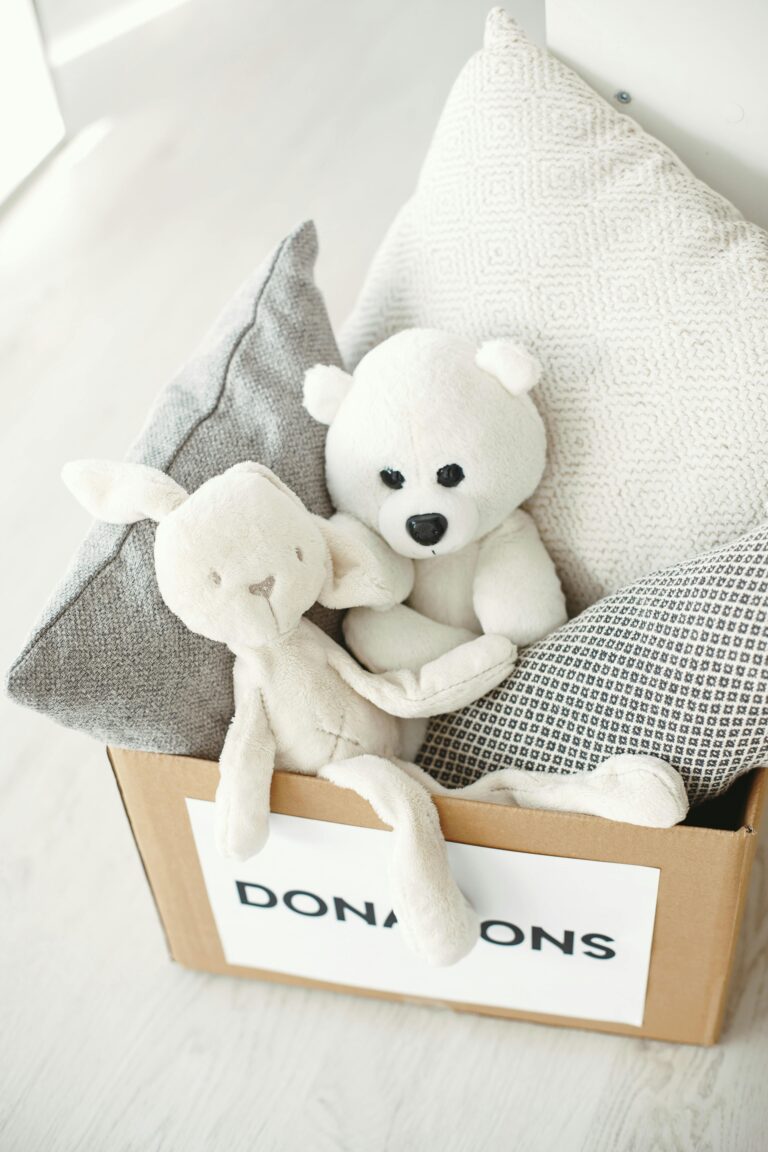
For our family, toy overload and clothing excess are the two biggest contributors to visual clutter. When I start running out of space to put things, stuff migrates to surfaces. There are no easy “home spots” anymore. Things just start living wherever there is room, which means they are always visible, always a reminder.
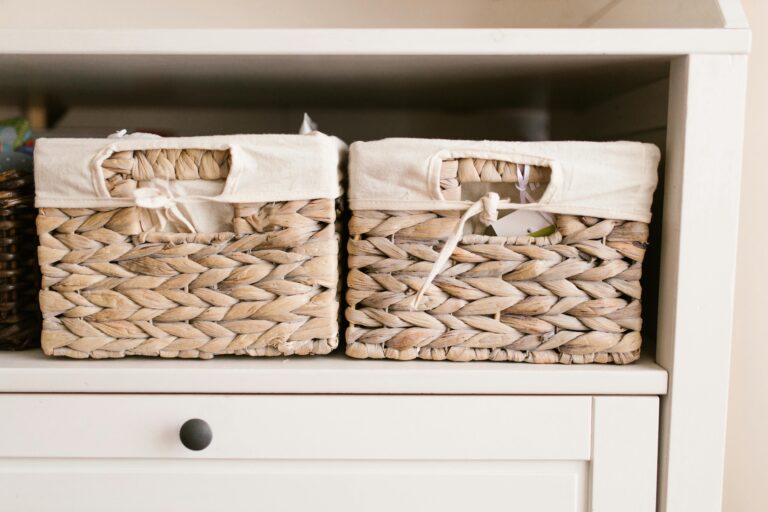
And here is where it gets a little complicated: I am genuinely grateful for these things. But I also struggle to let them go, even when it feels like we are drowning in them. For a long time, buying more baskets felt like the answer. More containers, more organization, more control.
What I have actually learned is that more baskets do not create more space. They just reorganize the same volume. I only have so many shelves and surfaces to put those baskets on, and when every spot is already full of containers, there is no room left for the things that do not fit neatly inside one. Eventually I had to ask myself a more honest question: how much space do I actually want to dedicate to this category? Because space is finite, and when I exceed it, my mental load goes up with it.
What Reducing Clutter Actually Does
When I can look around and see clear surfaces and baskets that are not overflowing, something shifts in me pretty quickly. I feel calmer. I regulate more easily. Cleanup takes less time because there is a real system to return to. I am not scanning the room and mentally cataloging everything that needs attention.
And that means I can actually be present. Clutter does not just make cleaning harder — it makes presence harder. That is the piece I wish someone had told me earlier, because it reframes the whole thing. Keeping our home manageable is not about appearances. It is about protecting my ability to actually enjoy being in it.
What I’ve Had to Accept About Creating Order
The biggest shift in my thinking has been accepting that organization cannot fix excess. Pretty bins cannot solve a volume problem. If I am constantly struggling to fit things into a space, that is not a container issue — it is a quantity issue. And no amount of reorganizing will change that until the quantity changes.
I have also had to accept that space has to be assigned realistically, based on how we actually live — not how I wish we lived. If toys spill off their shelf every single day, the shelf is either too small or there are too many toys. If clothes do not fit in the drawer, the drawer is not wrong. The system has to match real life, or it will never stick.
The other thing I have had to get honest about is how gradually this all builds. Because clutter creeps in slowly, I do not always notice when we have crossed the line from manageable into overwhelming. Now, when I feel unusually irritable or distracted and I cannot quite explain why, I have learned to scan the room first. Often it is not just my mood. It is the environment. Fewer visual reminders genuinely means fewer mental reminders — and fewer mental reminders means more emotional steadiness throughout the day.
So instead of asking how I can organize things better, I have started asking different questions. Do we need all of this accessible right now, or could some of it be rotated out? Does this item actually earn the space it takes up? Is the storage I have matching how we realistically use the space? Those questions cut through a lot faster than another trip to the container store ever did.
If You’re Feeling the Weight of It
If your home feels loud even when it is quiet, if your mental to-do list feels like it is written on every surface, if you are snapping more easily and not quite understanding why — I want to gently encourage you to pause and look around. Not with guilt. Just with curiosity.
What is visually demanding your attention right now? What category feels like it has quietly gotten out of control? Start there. Not with a full overhaul. Just one surface, one basket, one drawer.
Creating order in your home is not about making it look like no one lives there. It is about creating enough breathing room that your mind can actually rest. And when your mind can rest, everything else — including the motherhood part — feels just a little bit lighter.