
Simplify Before You Organize (Why Your Systems Keep Failing)
If you have ever looked around your house and wondered why organizing never seems to stick, you are not alone. Most of us assume the solution is better systems, prettier bins, or a smarter layout. We buy the baskets, rearrange the shelves, watch the tutorials. And then a few weeks later, everything looks exactly like it did before.
The real issue is usually simpler than any of that. You cannot organize what you have not first simplified.
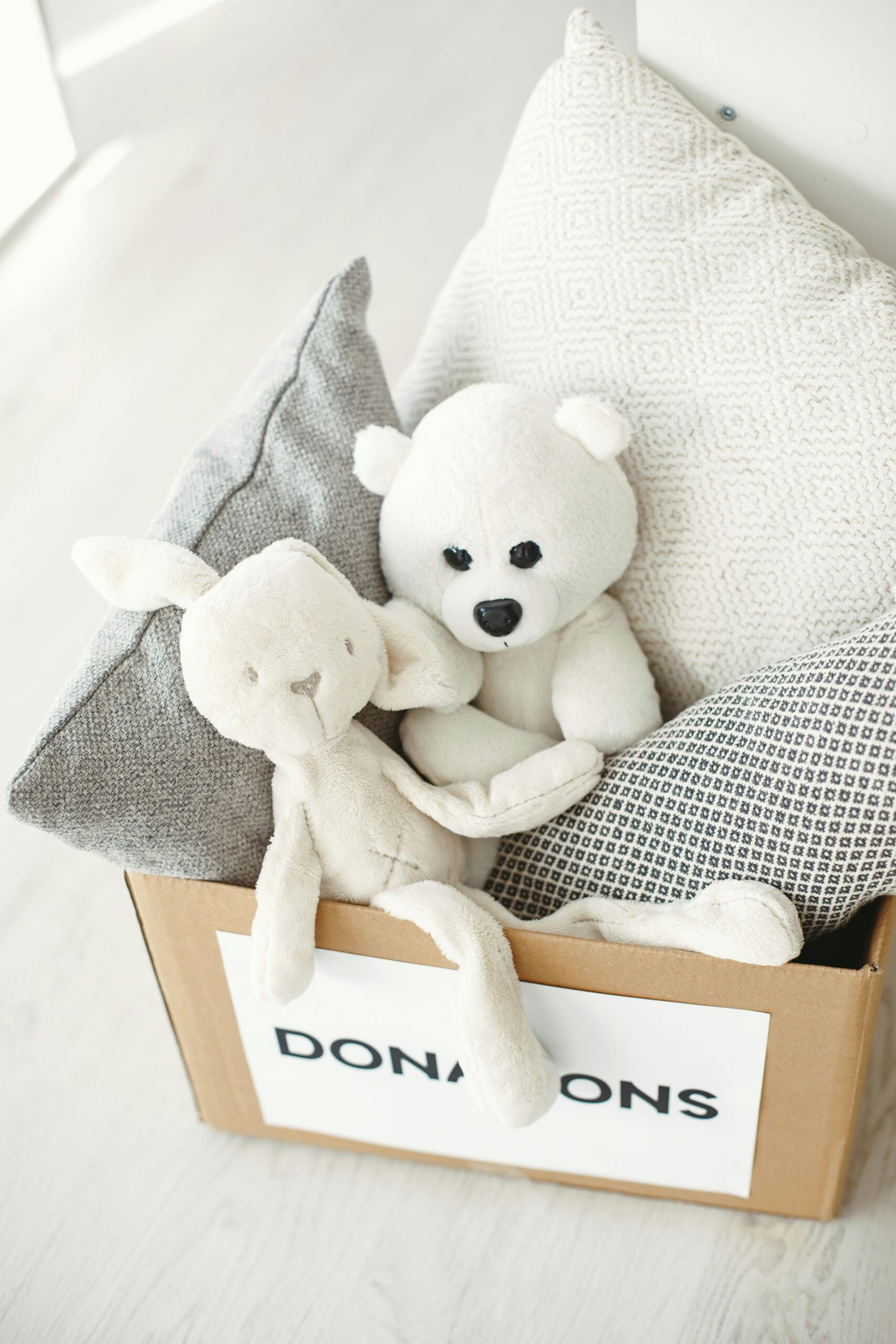
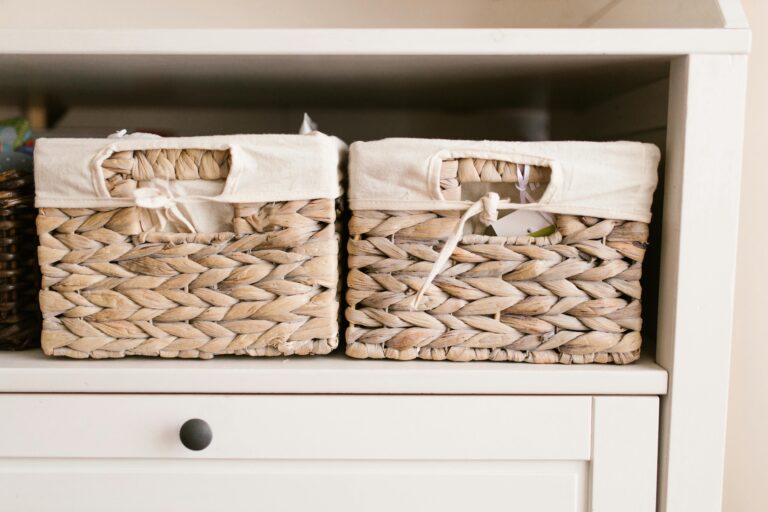
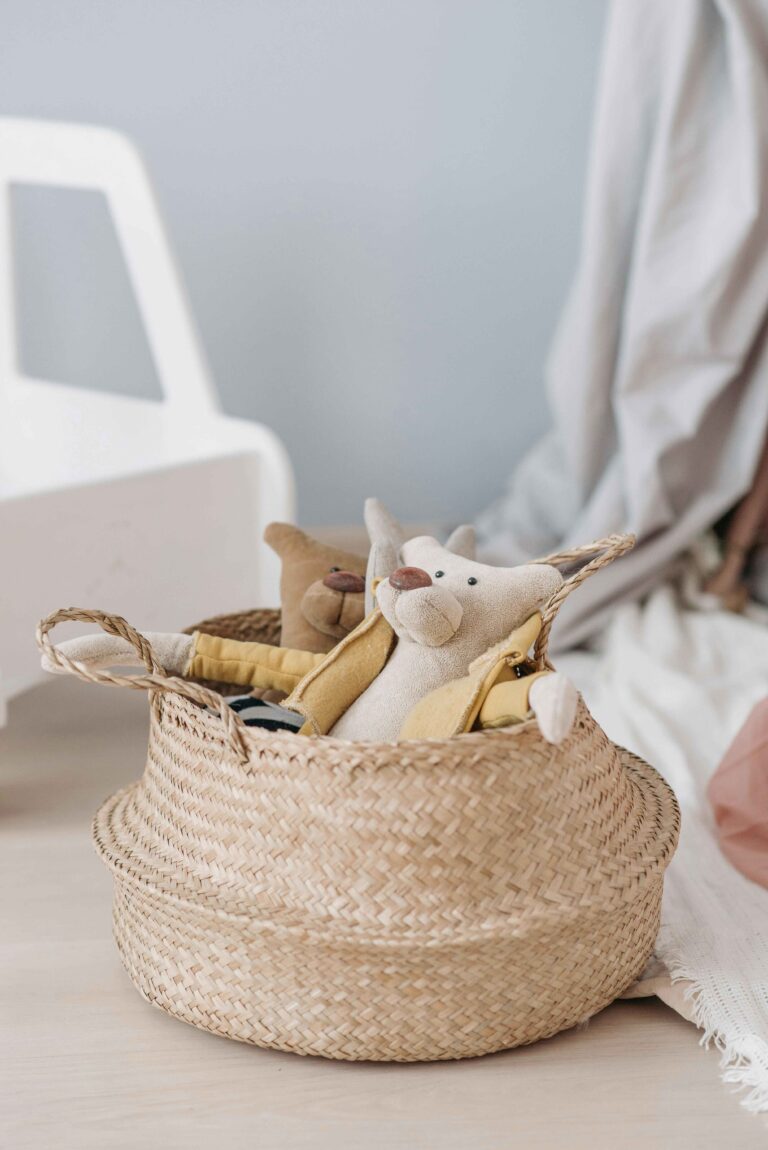
I learned this the hard way one afternoon when every basket on our shelves was full, the large tote I used for toy rotation was full, and the closet shelves were full — and there were still toys piled across the living room floor waiting to be put away. There was nowhere left to put them. I tried reorganizing the bins. I bought larger containers. I shifted shelves around. Nothing worked, because I was trying to create space that simply did not exist. The problem was not my organization system. The problem was volume.
What Too Much Actually Does to a Home
When a space holds more than it can reasonably manage, organizing becomes a losing battle. Cleanup takes longer because every usable surface doubles as temporary storage. Baskets overflow. Shelves feel tight. Things get stacked behind other things and forgotten entirely. You spend your energy rearranging rather than actually resolving anything, and even a beautifully organized room starts to feel heavy.
I noticed this most with toys after having kids. Having abundance is genuinely a gift, and I do not take that lightly. But too much can quietly work against the peace you are trying to build in your home. When I looked around and saw overflowing baskets in every corner, I did not feel grateful. I felt burdened. That was the moment I understood that I needed to simplify before I tried to organize anything again.
What Simplifying Actually Looks Like
Here is what simplifying is not: it is not purging everything, living with the bare minimum, or making emotional decisions in the middle of a frustrated afternoon. I have a holding bin in our home for exactly this reason. When a toy seems to have lost its appeal, I put it in the bin and leave it there for a few months. If no one asks about it, we let it go. That buffer takes the urgency out of the decision and helps me think clearly rather than reactively.
A more recent example that had nothing to do with toys: I used to open a kitchen cabinet and have travel mugs, water bottles, and plastic Tupperware practically launch themselves off the shelves from their precariously stacked positions. I kept telling myself I would deal with it later, and later never came. Finally I had enough. I went through everything and asked one honest question: what do we actually use? Turns out we were regularly using maybe thirty percent of what was in there. I spent some time figuring out how much we genuinely needed, let the rest go, and now I can open that cabinet and actually see what we have. It sounds small. It changed how that whole corner of the kitchen feels every single day.
And of course it is never truly one-and-done — more always seems to find its way in over time. But once you have done the initial work of simplifying a space, maintaining it is so much more manageable than the original overhaul.
How to Actually Start
The most important thing I can tell you is to start with the space you actually have, not the space you wish you had. Pick one category — toys, books, kitchen supplies, craft materials — and look at the physical space available for it. One shelf. Two drawers. One basket. That space is your limit. Do not expand it yet. Let it define the boundary, and if everything does not fit comfortably within that boundary, you have already found your answer.
Within that category, ask yourself honestly what is actually being used, what serves your current season, and whether you would even notice if something were gone. Be honest, but gentle with yourself. This is not about guilt or getting it perfect. Place anything you are uncertain about in a holding bin and give yourself time. Simplicity built slowly and thoughtfully is far more sustainable than simplicity built out of a frustrated Saturday afternoon.
Once the volume actually fits the space, organizing becomes almost straightforward. Items have breathing room. Baskets are not bulging. Shelves are not packed tight. Cleanup requires less decision-making because there is margin, and when there is margin, systems hold. That is the whole point.
Why It Matters Beyond the Mess
There is an emotional layer to this that I think gets overlooked in most conversations about home organization. When every surface is partially used for storage and messes build faster than you can keep up with them, the weight of it accumulates. I have noticed that when our spaces are simplified, I feel genuinely calmer. I am more patient. Cleanup feels achievable rather than endless. My girls can help more easily because there is actual clarity about what belongs where and where it goes back.
When there is less, there is less friction. That does not mean we live without things we love or need. It means we live within our limits, and within those limits there is room to breathe. There is room for gratitude instead of that low-level feeling of being buried. There is room for the kind of order that actually lasts — not because everything is perfect, but because the foundation underneath it is honest.
If you are feeling overwhelmed by a space right now, resist the urge to buy another bin. Pause and ask whether that space simply has more in it than it can reasonably hold. Start small. One shelf, one basket, one category this week. Let the available space set the boundary, evaluate what truly belongs, and set aside anything uncertain rather than forcing a decision. You do not need more storage. You need breathing room. And once you have it, you will wonder why you waited so long to create it.

One Comment